Elif Uras
Rodio Orientali
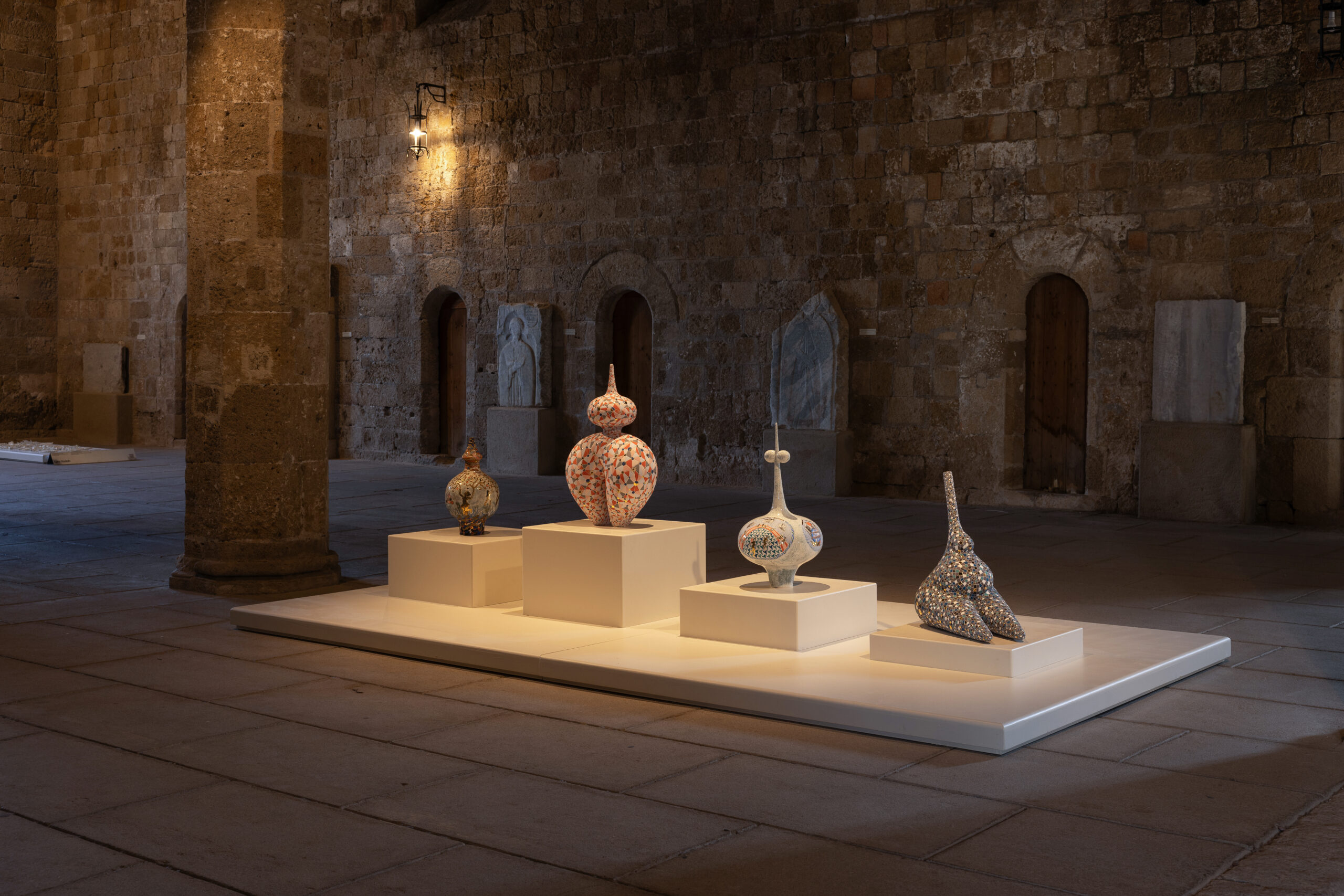
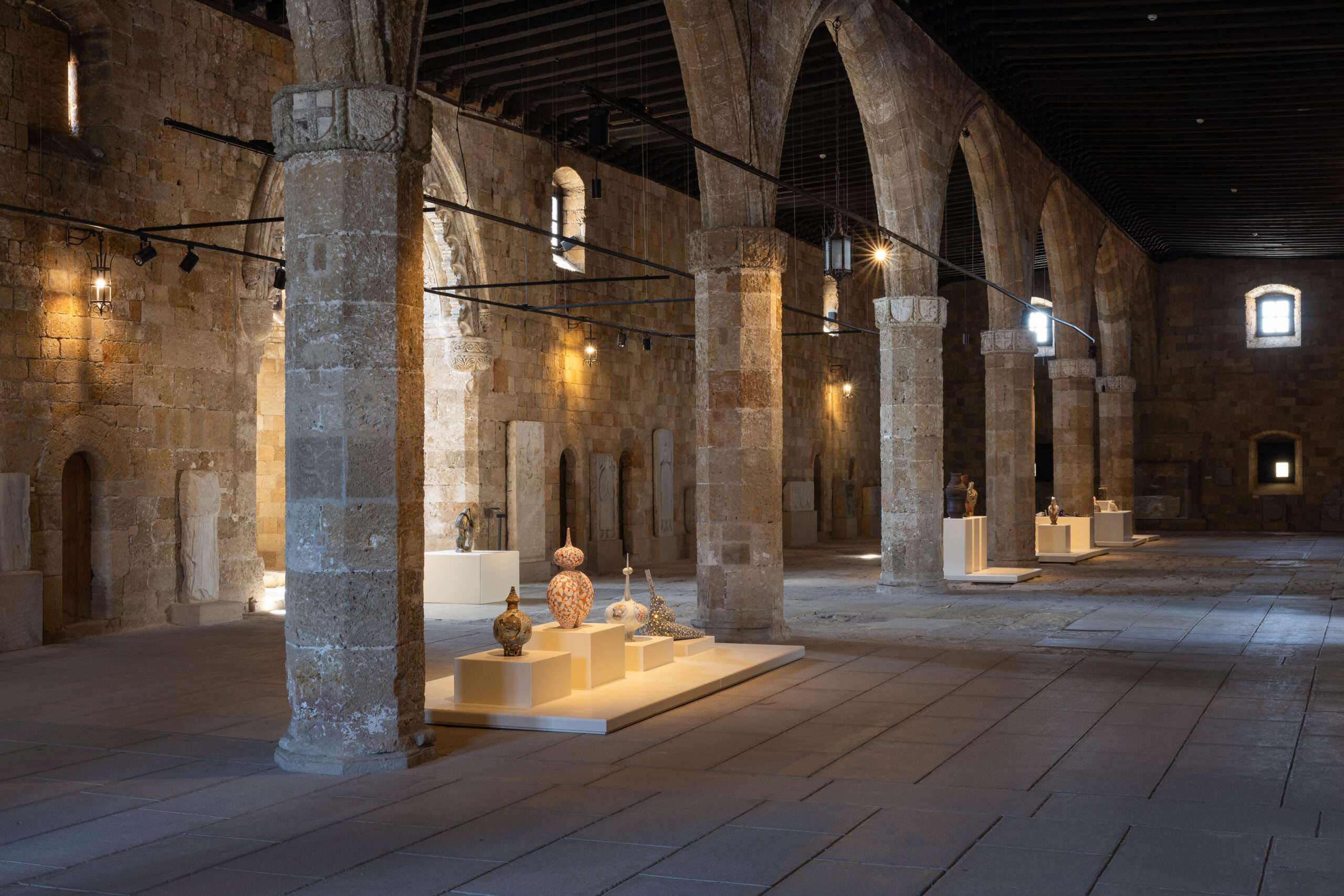
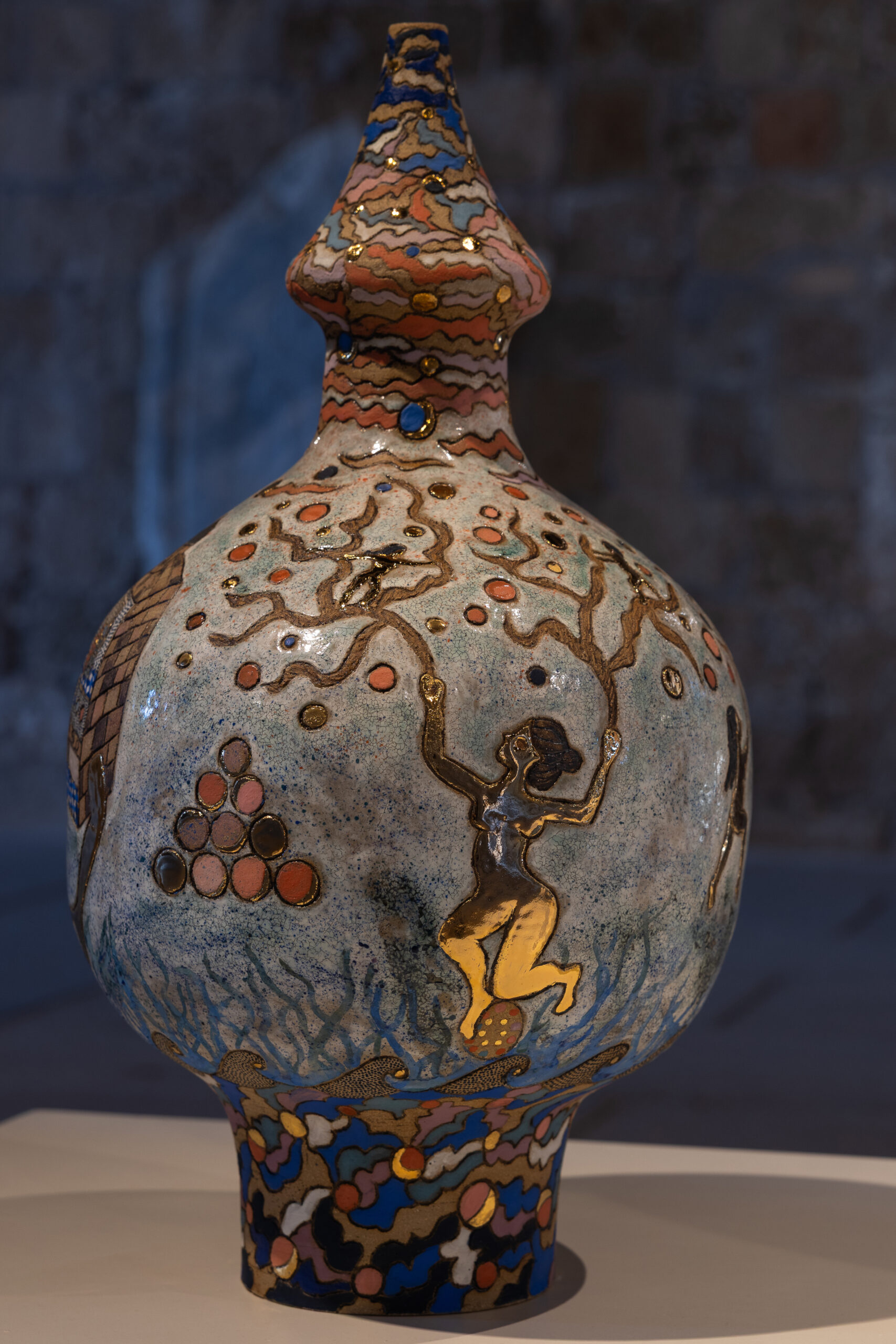
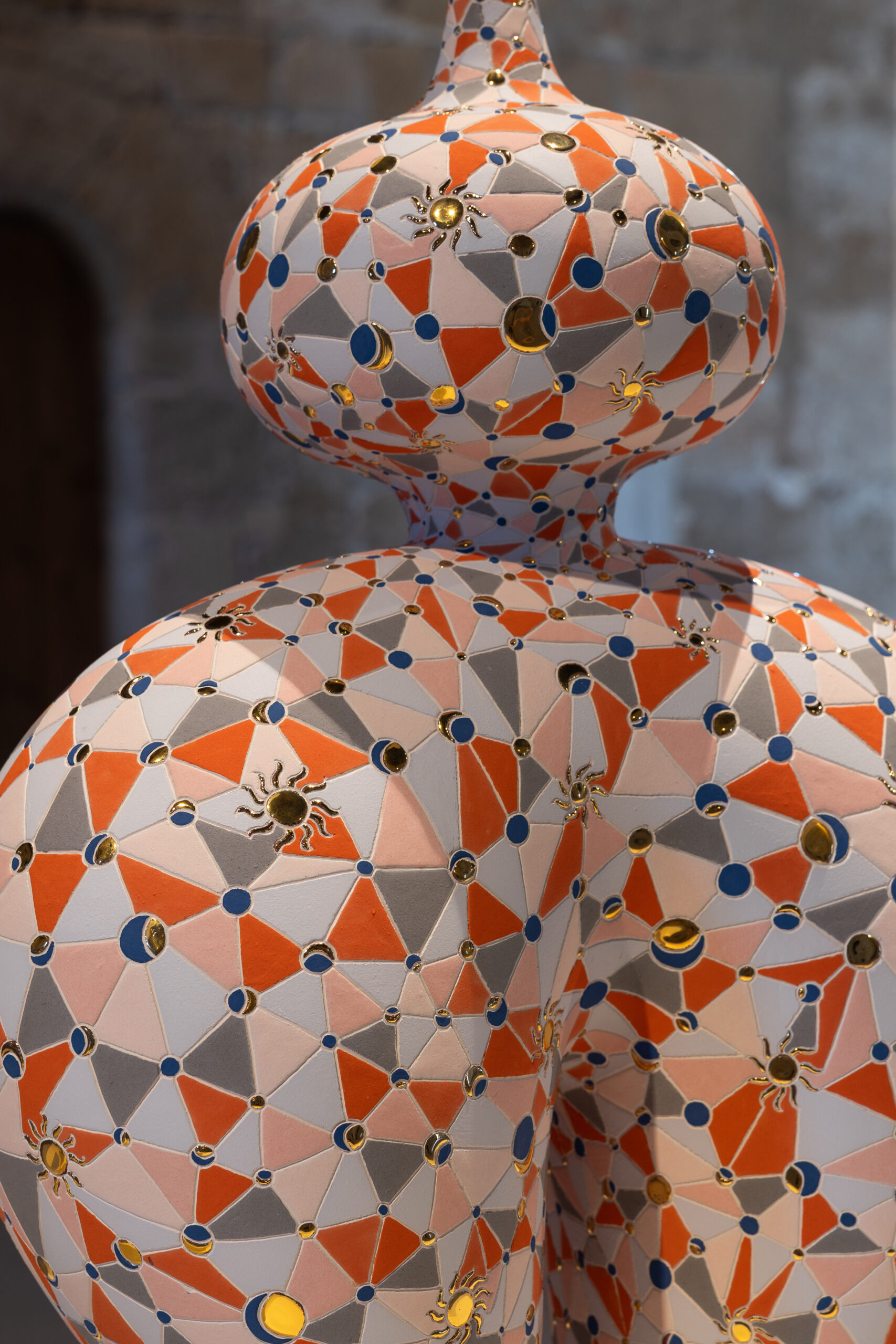
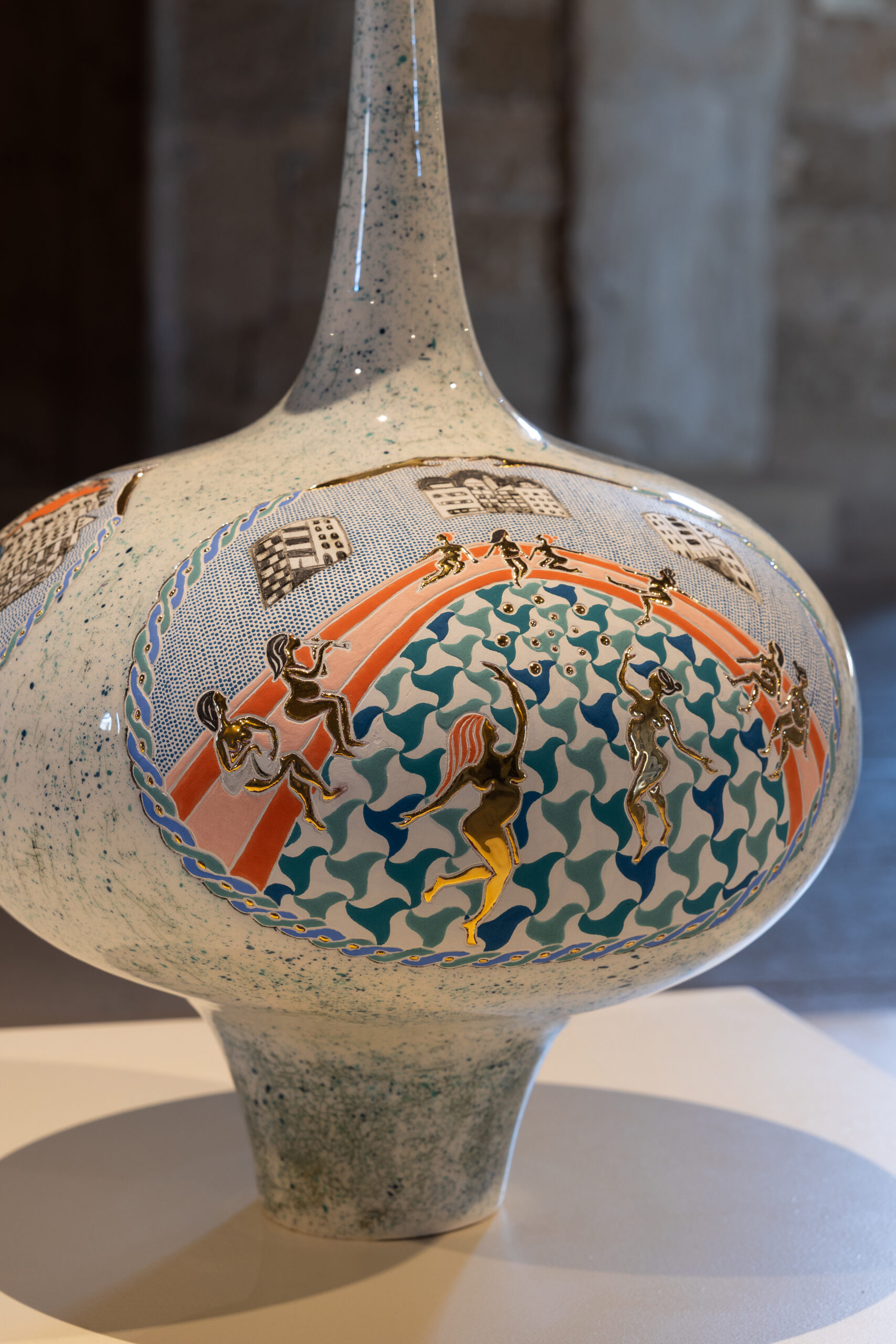
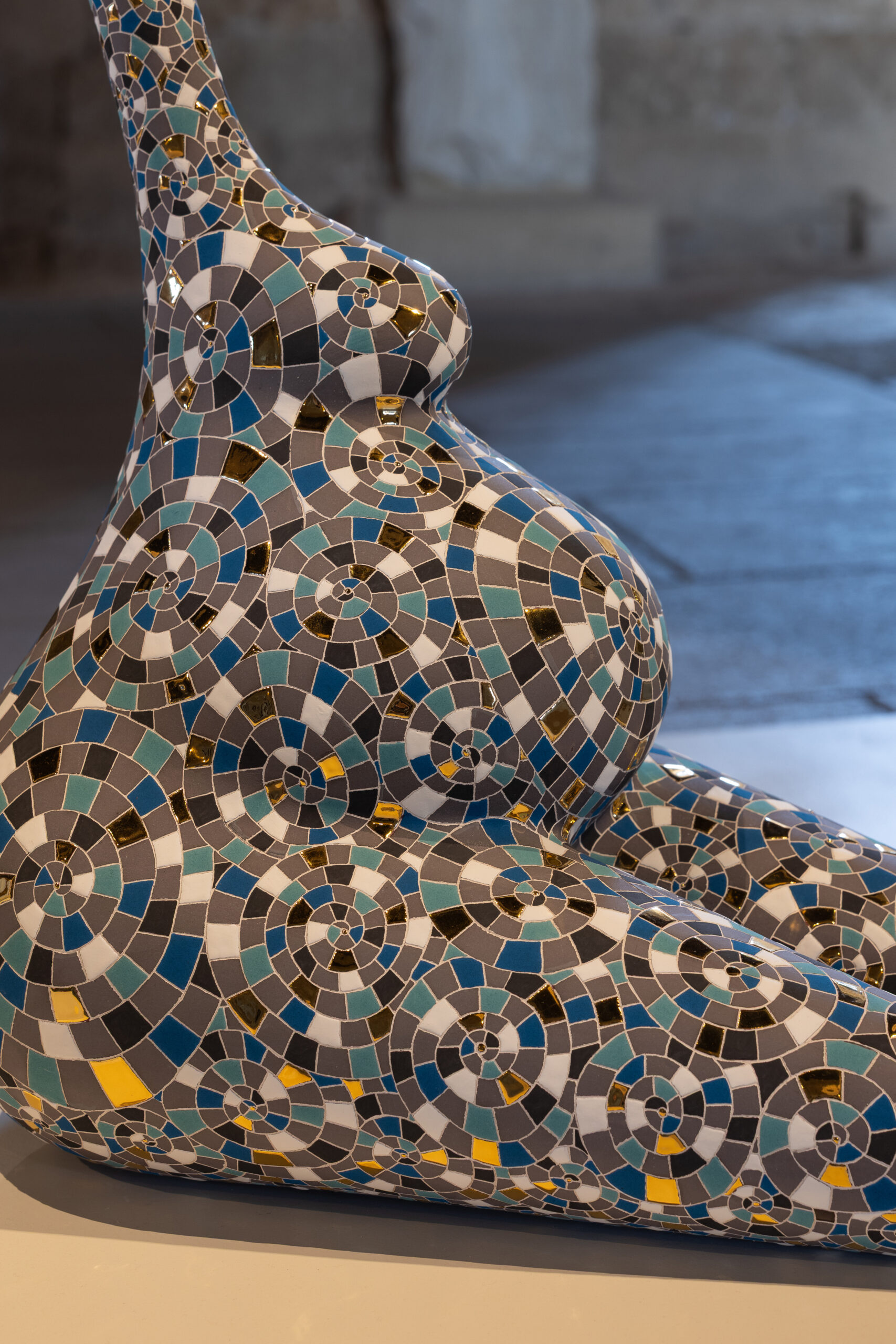
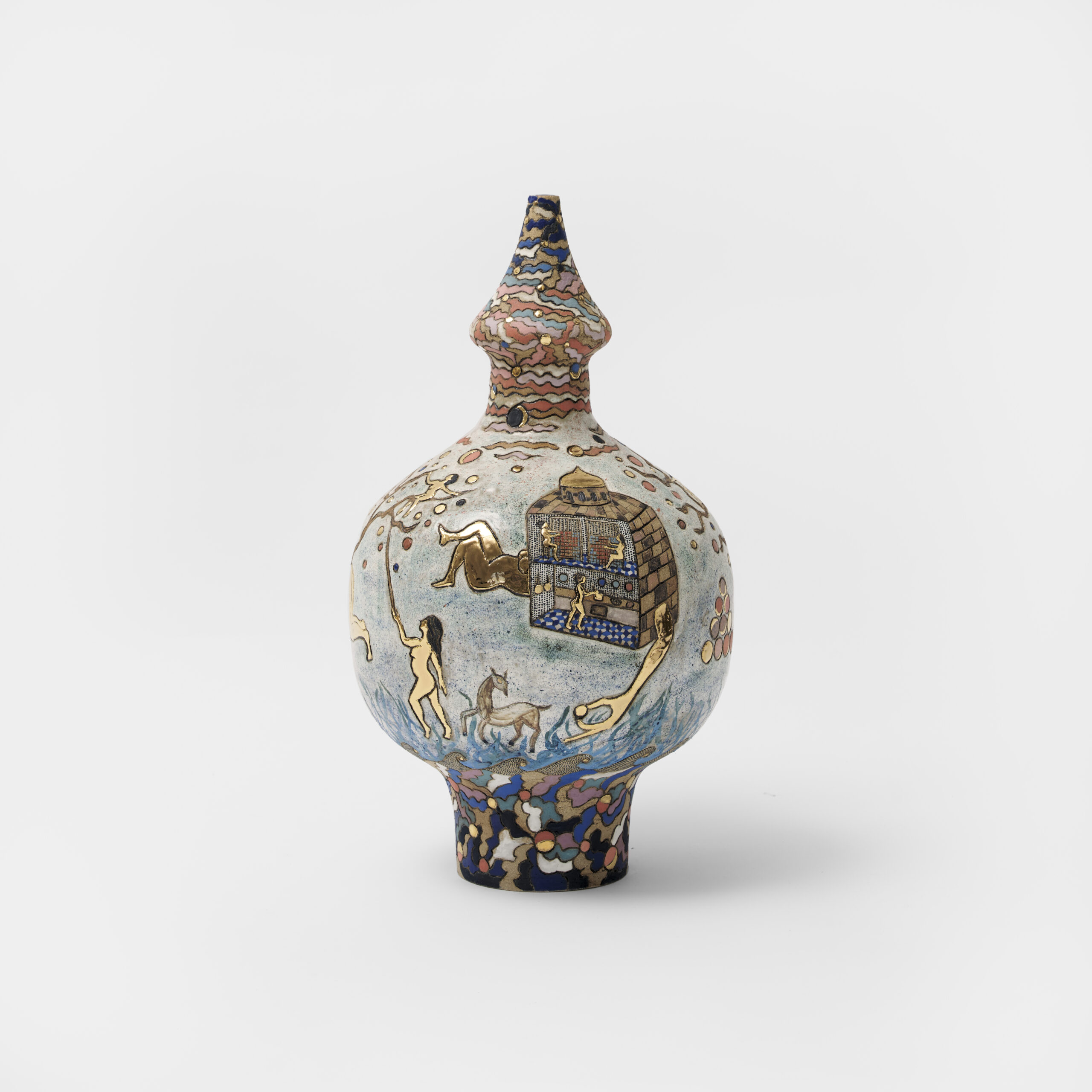
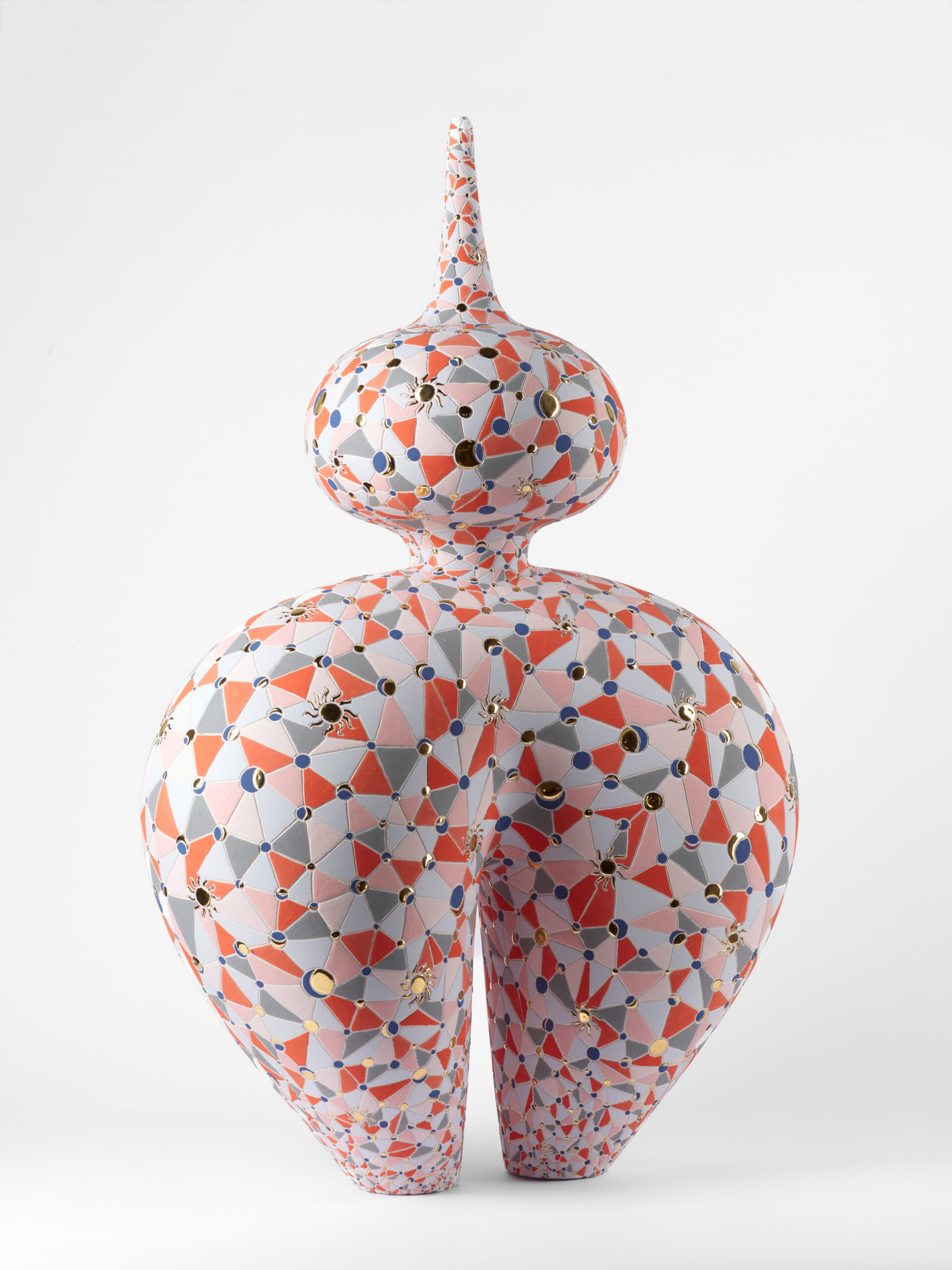
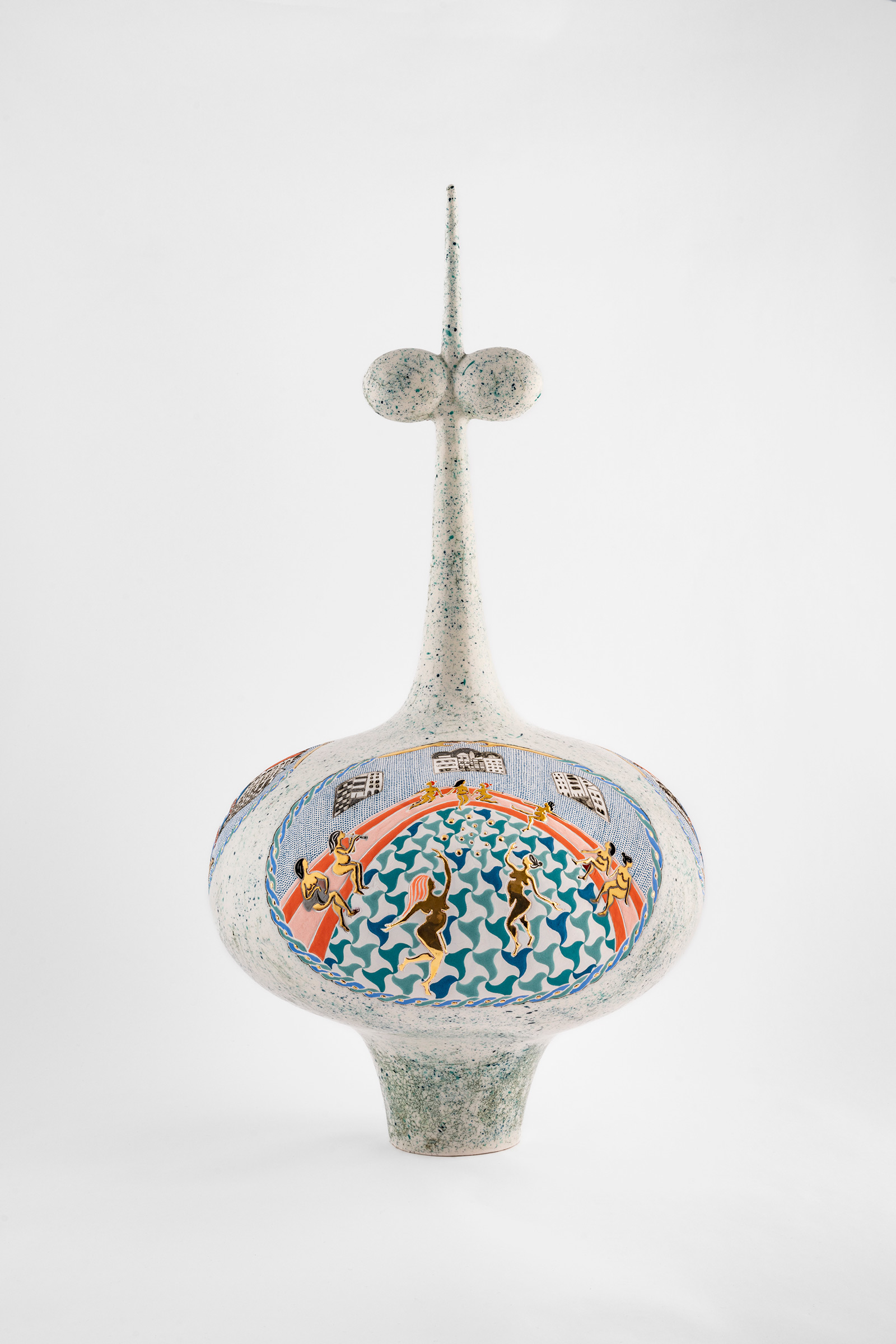
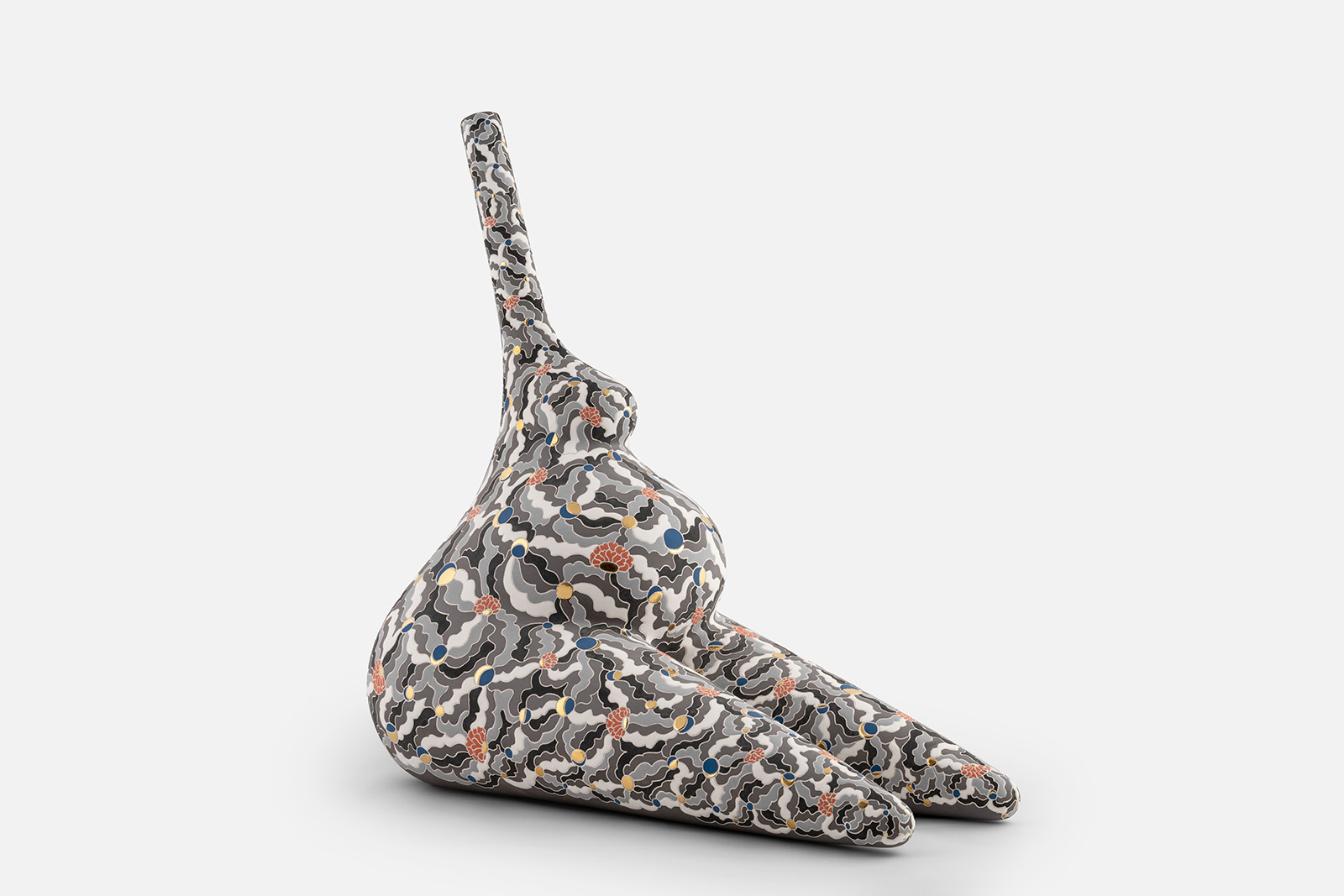
Elif Uras’s works center women’s labor within historical and material culture. Her presentation for the BCK Biennale brings together wheel-thrown and hand-built ceramic works created in New York with slip-cast pieces produced in Iznik—the historic center of Turkish pottery since the Ottoman era. Her voluptuous vessels merge the figurative with the abstract. Optical patterns drawn from Islamic geometry ripple across sculptural forms inspired by Neolithic clay figurines native to her geography. Through the use of slips, washes, underglaze paint, and gold luster, Uras creates richly textured, relief-like surfaces that shimmer with layered resonance. Informed by the prehistoric, Greek, Roman, and Byzantine legacies of the region, she reclaims suppressed histories and amplifies enduring lineages. Gilded female figures populate the surfaces of her ceramics, engaged in acts of caregiving, domestic labor, agriculture, and heritage crafts such as weaving and pottery. Uras transforms these undervalued activities into expressions of resilience and resistance, rendering them timeless through mythic form.
Image 1: Elif Uras, Universal Mother, 2026, underglaze, glaze and gold luster on stonepaste, 76,2 x 45,7 x 25,4 cm. Courtesy of the artist and GALERIST. Supported by CIF.
Image 2: Elif Uras, Gold Day, 2026, underglaze, glaze and gold luster on stonepaste, 75 x 37 x 37 cm. Courtesy of the artist and GALERIST. Supported by CIF.
Image 3: Elif Uras, Rodio Orientali, 2026, terra sigillata, underglaze, glaze and gold luster on stoneware, 51 x 32 x 32 cm. Courtesy of the artist and GALERIST. Supported by CIF.
Image 4: Elif Uras, Seated Mosaic, 2026, terra sigillata, underglaze, glaze and gold luster on stonepaste, 53 x 60 x 32 cm. Courtesy of the artist and GALERIST. Supported by CIF.